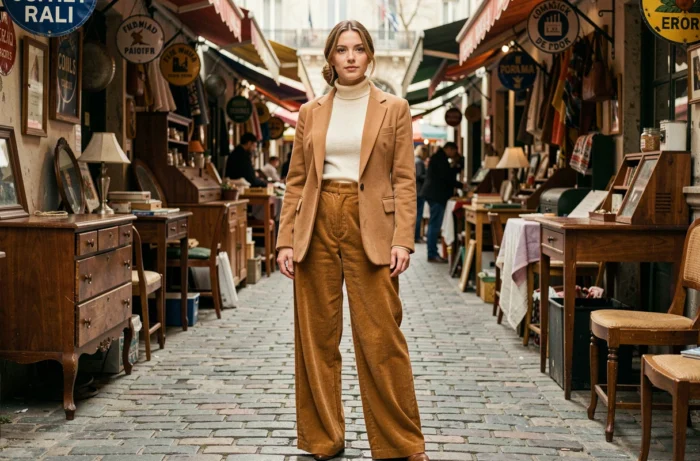
An oversized tweed blazer found in a thrift store, worn with raw denim jeans and white sneakers: the result is a look that borrows from the 1980s without feeling like a costume. The challenge of vintage style lies in getting the balance right between an older piece and a modern cut, so the outfit still feels wearable every day.
Fabrics and finishes: what sets a reliable vintage piece apart from a risky buy
Before thinking about silhouette or color, start with the fabric. A wool jacket from the 1970s often has a tighter weave than a comparable new one from a mass-market retailer. You can tell by its feel and how well the garment holds its shape on a hanger.
The condition of the inner seams offers a quick indication of how much wear the garment has left. Even topstitching, reinforced buttonholes, and an intact lining are signs of a piece that can last for several more seasons. By contrast, fabric that pills at the folds or puckers around the collar signals that it is nearing the end of its life, however appealing the cut may be.
Synthetic fabrics from the 1980s and 1990s (heavy polyester, thick viscose) age differently from cotton or wool. They hold their shape but lose their softness. You can explore Renée Fashion’s vintage styles to spot cuts that work with these fabrics without making the silhouette look stiff.
The European Ecodesign Regulation, which came into force in 2024, sets out future requirements for textile durability and repairability. The 2025–2030 working plan prioritizes this sector. In practical terms, choosing a repairable vintage piece anticipates a regulatory approach that is currently being rolled out.

Retro style and a modern wardrobe: three combinations that work
Mixing vintage and contemporary pieces does not mean overhauling your entire wardrobe. Start with one statement piece that sets the retro tone, then balance it with modern basics.
1960s floral-print dress and flat boots
A midi dress with a floral print and a straight or slightly flared cut pairs well with flat ankle boots and a structured bag. The contrast between the delicate print and the rugged accessory brings the outfit up to date. Avoid matching heels, which can make the look feel like period costume.
1990s high-waisted jeans and a minimalist shirt
Mom jeans or straight-leg high-waisted jeans are among the easiest vintage pieces to work into a modern wardrobe. A plain shirt tucked into the jeans is all it takes to create a retro-modern balance. Let the denim color guide the rest: light washes call for neutral tones, while dark raw denim can handle brighter shades.
Corduroy jacket and slim-fit trousers
1970s corduroy jackets, often in tobacco, rust, or forest green, work well as layering pieces. Worn open over a plain T-shirt with slim-fit trousers, the jacket adds texture without weighing down the outfit. The earthy colors of vintage corduroy pair well with the palettes of current collections, making them easy to style.
Retro accessories: the ones that really transform an outfit
Vintage accessories are more than decoration. Chosen well, they shape the way an entire outfit comes across. Three categories are worth a closer look.
- Thick-framed sunglasses (such as cat-eye styles or oversized aviators) change the proportions of the face and immediately signal a deliberate style choice. They are easy to find in thrift stores or at flea markets for a fraction of the price of a new pair.
- Wide leather belts worn at the natural waist add structure to a flowing dress or an oversized coat. A vintage full-grain leather belt develops a patina over time rather than wearing out.
- Printed silk scarves (with geometric or floral patterns) can be tied around the neck, worn as a headband, or knotted around a bag handle. Their versatility makes them an accessible entry point into retro style for anyone hesitant to invest in secondhand clothing.
A common mistake is to pile on accessories from the same decade. A 1970s scarf with 1970s sunglasses and a 1970s belt turns the outfit into a theme. Mixing eras creates a more cohesive look: one distinctive vintage accessory, with the rest kept neutral or contemporary.
Finding vintage pieces: thrift stores, consignment shops, and useful tips
Online platforms have made secondhand shopping more popular, but brick-and-mortar stores offer an advantage a screen cannot match: feeling the fabric, checking the finishes, and trying on the cut in person. In France, secondhand textile sales are growing, although they still account for a small share of the volume of new clothing consumed.
When you buy a vintage piece from a professional seller (a consignment shop or a thrift store operating as a business), you retain legal protections comparable to those for a new purchase, including the statutory guarantee of conformity. This makes a difference compared with a transaction between private individuals.
- In thrift stores, start with the blazer, jacket, and coat sections: these are the pieces where the quality gap between vintage and fast fashion is most noticeable.
- Always check zippers, buttons, and the elasticity of built-in belts: these are the first details to fail and the most expensive to replace.
- For dresses and blouses, favor cuts that do not rely on a precise fit at the waist. Loose-fitting pieces and straight cuts are more forgiving if you are between sizes.
The quality of a vintage piece varies depending on the original brand, the decade it was made, and how it was stored. A 1960s coat kept in a dry closet is nothing like the same model left in a damp attic. This variability makes inspecting the garment in person more reliable than relying on any online photo.
Retro style works when it is about choosing a few pieces, not dressing up. One standout vintage piece per outfit creates a cleaner look than head-to-toe period styling. The rest of the wardrobe helps bring the look into the present.