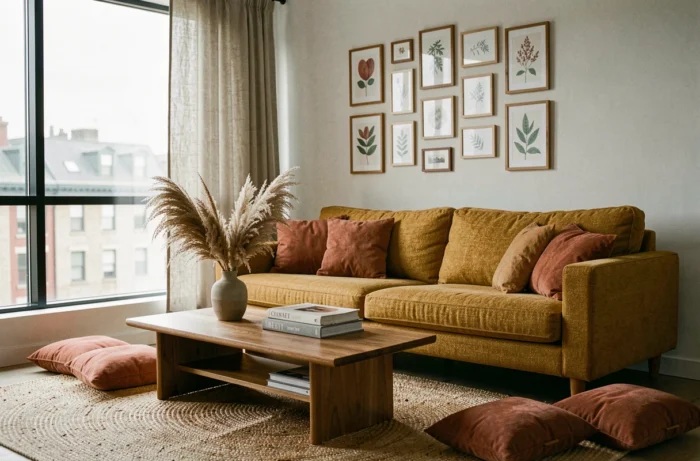
A sofa that’s too big for the living room, a wall color that looked perfect on screen but turns dull once it’s on the wall: we’ve all made a decorating choice that didn’t work in the actual space. Creating an interior that feels like you doesn’t start with browsing a catalog. It starts with taking a close look at the space you have, the light coming in, and the constraints you can’t work around.
Energy-efficient renovations and decorating: two projects to tackle together
When planning to renovate an interior, it’s tempting to choose the finishes first (paint, flooring, light fixtures) and deal with insulation or heating later. In practice, doing things in the reverse order saves you from having to start all over again.
Since January 1, 2025, homes rated G on the DPE energy performance certificate can no longer be offered under new leases in mainland France. The announced deadlines for ratings F and E are 2028 and 2034, respectively. If you’re a landlord or have just bought an energy-inefficient property, energy-efficient renovations will directly influence your decorating choices.
In practical terms, internal insulation reduces the usable floor area by a few centimeters along each wall it covers. Changing the heating system may mean moving radiators or installing underfloor heating, which affects your flooring choice. If you lay hardwood flooring before insulating, you may have to take it up again a few months later.
In a condominium, the constraints are even greater: facade insulation or replacing the shared heating system depends on a vote at the general meeting. You have no control over the timing or the outcome. It’s therefore best to focus decorating investments on things that affect only your own unit (interior partitions, furniture, lighting) and put off finishing the facade-facing walls.
To explore the different rooms and their specific design considerations, ID Habitat’s home section offers detailed guides that bring together style and technical constraints.
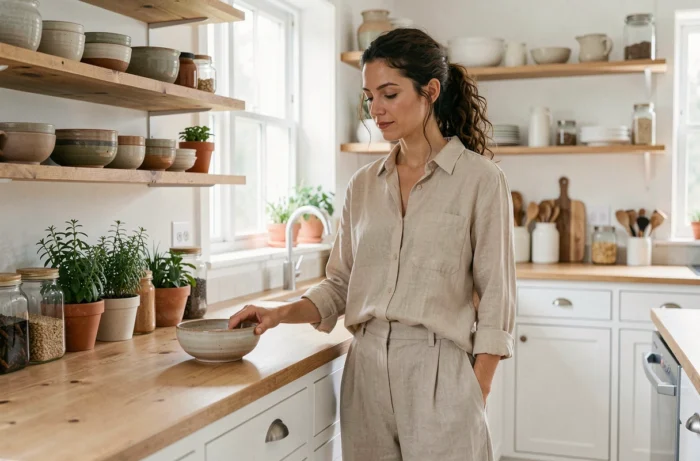
Colors and natural light: tailor your palette to the actual room
Most decorating guides recommend “choosing colors you like.” The problem is that a shade doesn’t look the same in every room: its appearance depends on the room’s orientation, ceiling height, and natural light.
Test before painting an entire wall
Apply a paint sample directly to the wall you plan to paint, not to a piece of white cardboard. Look at it at three times of day: morning, noon, and evening. A color changes dramatically depending on the light falling on it. A blue-gray can look warm in slanting light and cold under fluorescent lighting.
In a north-facing room, cool shades (blue, sage green, gray) tend to make the lack of light more noticeable. Warm tones (terracotta, ochre, off-white with a yellow undertone) can partly make up for it. By contrast, a south-facing room can handle richer colors without looking dark.
Blinds and curtains as a way to fine-tune the light
Choosing blinds or curtains changes the amount and quality of light that comes in. Sheer curtains filter the light without blocking it, while blackout blinds shut it out. Window treatments affect the mood just as much as wall color. Before repainting, see whether simply changing the curtains could transform the atmosphere.
Adaptable furniture: a practical choice, not just an aesthetic one
We often think of furniture as a style choice. In practice, it’s also something you need to carry up a narrow staircase, fit into an attic room, or move to a new home in three years.
- Flat-pack furniture is easier to transport and fits through tight access points (stairwells, narrow doorways, angled hallways)
- A modular sofa can be reconfigured when you move or have a child: add or remove a seat without replacing the whole thing
- A freestanding bookcase, rather than one fixed to the wall, means you don’t have to drill into reinforced concrete or risk finding a utility duct behind the partition
- A removable desk surface lets you switch from sitting to standing, or clear the space for another use
Adaptable furniture protects your investment as life changes. Furniture that can’t be taken apart, repaired, or adapted often ends up at the dump after just a few years.
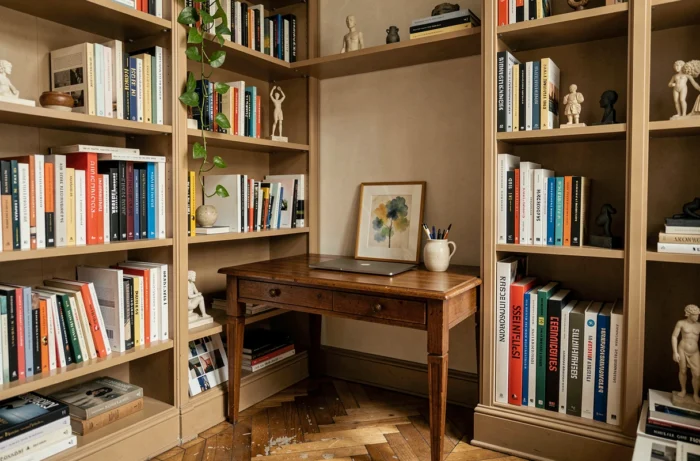
Personal belongings and reuse: bring in meaningful pieces without cluttering the space
Filling your home with decorative items bought in sets from a home decor store can make it feel generic. The pieces that give a space character are often the ones with a story: a vintage find, a ceramic brought back from a trip, or a salvaged frame that’s been repainted.
Reuse is also a practical way to source furnishings. Reuse centers, flea markets, and secondhand platforms offer furniture and decor at prices that are often lower than new. A well-chosen secondhand piece adds a one-of-a-kind touch that mass-produced items can’t replicate.
The challenge is finding the right balance. Too many personal items in one space create visual clutter that undermines the effect you’re after. Here’s a simple rule of thumb:
- Limit displayed items to three or four per visible surface (shelf, console table, windowsill)
- Vary heights and materials to avoid a monotonous look
- Put the rest away: items that aren’t on display can be rotated back in, like pieces in a gallery
An interior that feels like you isn’t set in stone. Tastes evolve, and needs change with the seasons and different stages of life. Before every purchase or brushstroke, keep one final question in mind: will this decision be easy to change in two years, or is it a permanent choice that has to be perfect from the start?