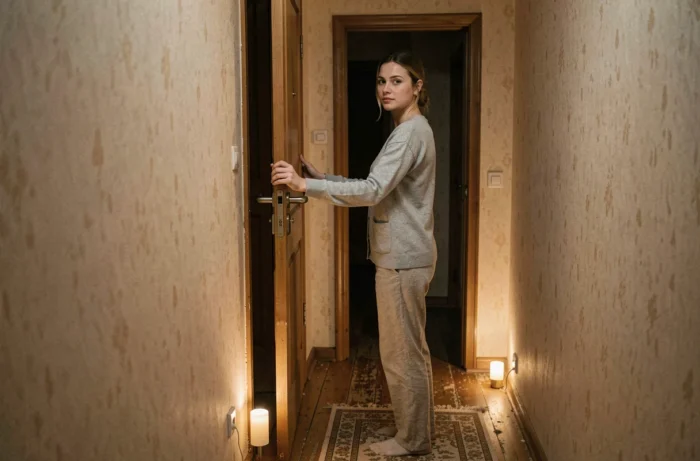
Closing a child’s bedroom door at night and locking it from the outside are two very different things, but confusion between the two fuels an ongoing debate among parents.
The question of locking a child in their bedroom at night comes up regularly on parenting forums, often prompted by exhaustion from repeated night wakings or a child repeatedly getting out of bed. It touches on a child’s sleep, home safety and the limits of what gentle parenting can accept.
Closed door versus locked door: a distinction required by fire safety
Recommendations shared by the UL Fire Safety Research Institute point in a clear direction: closing bedroom doors before going to sleep slows the spread of smoke and heat in the event of a fire. This advice applies to a door that is simply closed, not locked from the outside.
A lock prevents a child from leaving, but it also prevents an adult from getting in quickly in an emergency. Locking a door makes evacuation more difficult when every second counts. The Fairfax County guide also recommends identifying two possible exits from each room and practicing the evacuation plan with children as soon as they are old enough to understand it.
The decision to lock a child in their bedroom at night should therefore be considered from this practical perspective before even addressing the educational aspect. A latch installed as a parental precaution can become an obstacle during a household emergency.
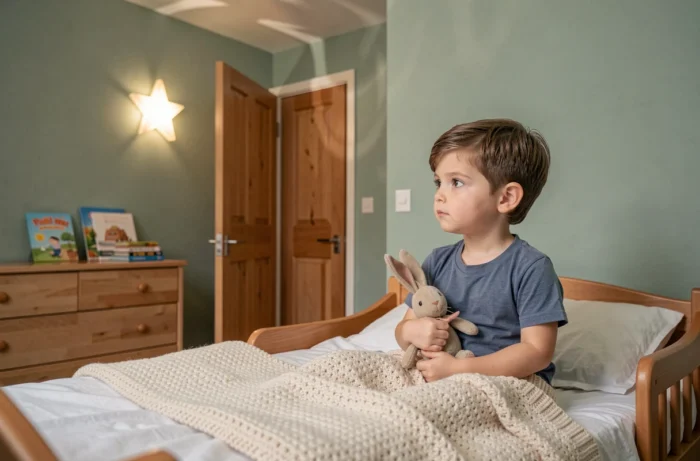
Punishing a child by isolating them in their bedroom: what child development experts say
Locking a child in their bedroom at night as a punishment falls under what child development professionals call emotional withdrawal. In 2023, Le Monde reported experts’ views on this practice: exclusion is effective for “conditioning,” not for “educating”. This is more than a matter of semantics.
A child who is forcibly isolated may come to associate their bedroom, which is also where they sleep, with punishment. This association can cause anxiety at bedtime, even though parents often initially hoped to make it easier for the child to fall asleep.
The particular case of a child who gets out of bed at night
A two- or three-year-old who repeatedly gets out of bed is not necessarily trying to be difficult. Mpedia, the website of the French Association of Outpatient Pediatrics, notes that night wakings at this age are common and part of normal sleep development. Pediatrician Dr. Catherine Salinier recommends support rather than physical restraint.
A child who gets up at night is expressing a need, not deliberately defying their parents. Hunger, thirst, fear of the dark, nightmares, or a need for reassurance after a change (moving house, the arrival of a younger sibling): there are many possible causes. Locking the door addresses none of them.
Making a bedroom safe without locking a child in: practical adjustments
The real problem parents are trying to solve is not always about discipline. Many lock the door because they fear their child might get hurt while wandering around the house alone as the rest of the family sleeps. This concern is valid.
The American Academy of Sleep Medicine recommends several measures for a child who moves around while asleep or gets up at night:
- Clear the path between the bed and the door to prevent falls over toys or low furniture
- Secure windows with suitable window locks, especially on upper floors
- Install a safety gate at the bedroom door instead of a lock, allowing the child to see outside while enabling an adult to step in immediately
- Remove or secure to the wall any furniture that could tip over if the child tries to climb it
A safety gate provides a barrier without creating a sense of confinement. The child stays within a safe area, airflow is maintained and evacuation remains possible within seconds.

Alternatives to locking doors at night
Beyond practical changes to the room, the underlying issue is the bedtime routine and boundaries. There are several approaches, and none requires locking a door.
A consistent bedtime routine
A predictable sequence (bath, story, cuddle, lights out) gives children a sense of timing that can ease separation anxiety. Consistency matters more than how long the routine takes. A short, consistent routine is more effective than a long, irregular one.
Returning the child to bed without prolonged interaction
When a child leaves their room, calmly walk them back to bed without starting a conversation or showing anger. This approach requires consistency over several nights. It does not produce immediate results, which can discourage some parents, but it preserves trust.
Adjusting the lighting
A dim, warm-toned night-light may be enough to reassure a child who wakes up disoriented. Some children get out of bed simply because complete darkness makes them anxious. Addressing this specific issue can sometimes make locking the door unnecessary overnight.
There is no strong evidence that any one method works for every child at every age. A child’s age, temperament and family circumstances should guide the choice far more than any universal rule. An 18-month-old who climbs over a safety gate calls for a different approach than a four-year-old negotiating for one more glass of water.
The question of locking a child’s bedroom at night brings two genuine parental concerns into tension: physical safety and setting boundaries. The available recommendations point in the same direction. Making the sleep environment safe and supporting a child as they learn nighttime independence lead to more lasting results than locking the door, without exposing the family to additional risks in an emergency.