Sphagnum peat moss can hold ten to twelve times its weight in water. This physical property, more than any other, explains why it is so widely used in horticultural substrates and potting mixes. But using it in the garden without understanding how it behaves in a mix means wasting a resource that is no longer extracted in France and is now available only through imports.
Blonde peat and black peat: water retention and structural limitations
The difference between blonde peat and black peat is about more than color. Blonde peat, which is less decomposed, retains a fibrous structure that promotes aeration in the growing medium. It releases water gradually, helping to buffer moisture fluctuations around the roots. It is the go-to material for sowing seeds and repotting.
Black peat, by contrast, is much further decomposed on the Von Post scale. Its high density makes it compact. It shrinks considerably as it dries, creating cracks in the growing medium and breaking contact between the roots and the moist substrate. Rehydrating dried-out black peat takes a long time because water runs off the surface without penetrating the mass.
Knowing how to use peat in the garden starts with choosing the right grade. For amending clay soil, coarse blonde peat improves drainage. For a container growing medium, a finer grade works better, provided you never let the mix dry out completely.
Ratios and mixing: the proportions that make a difference
Peat should never be used on its own in open ground. When mixed with the existing soil, it changes water retention and lowers the pH. A common mistake is to add too much, making the growing medium excessively acidic and depriving plants of available nutrients.
For a planting hole (for a shrub or perennial), blonde peat should make up about a quarter of the final mix (peat, garden soil, compost) to improve root establishment. Moisten the peat before mixing it in. Mixing dry peat into clay soil creates useless hydrophobic pockets.
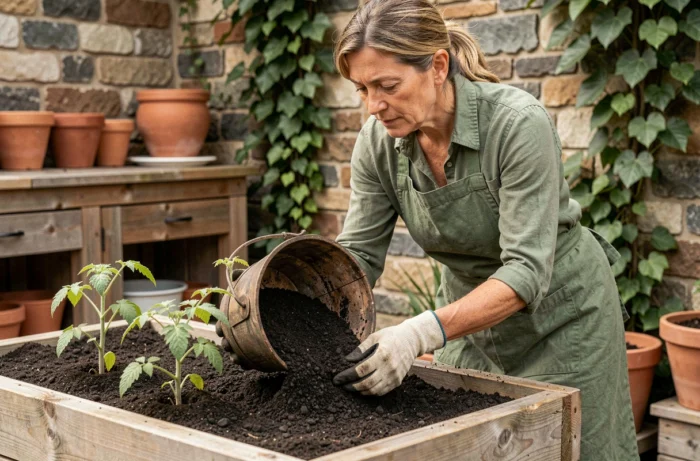
In pots or planters, the proportion can be higher, but peat alone provides virtually no nutrients. It needs to be supplemented with:
- Mature compost to support microbial life and provide nutrients that peat lacks
- Perlite or coarse sand if the mix needs to remain very free-draining, especially for plants that are sensitive to excess water
- A lime amendment (dolomite, lithothamnium) whenever the target pH is above 5.5, since blonde peat is naturally acidic
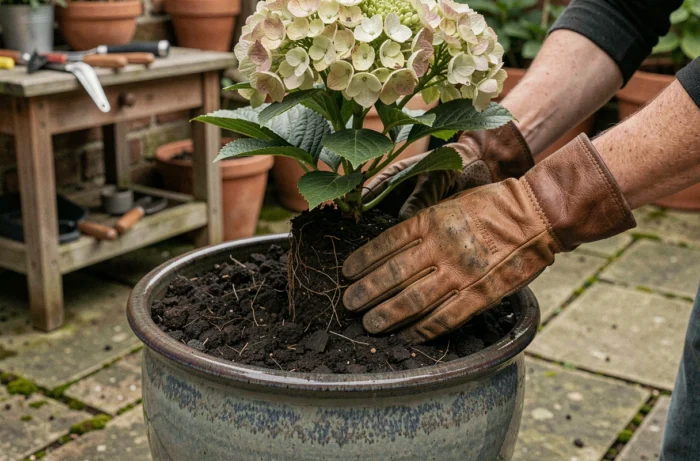
Acid-loving plants (rhododendrons, camellias, blue hydrangeas) are the main beneficiaries of a peat-rich growing medium. For vegetable crops and fruit trees, compost is a better-nourishing substitute for peat that does not acidify the soil.
Alternatives to peat: coir, compost and practical limitations
Peat-free growing media are gaining ground. WWF France has proposed a phased transition: peat-free potting mixes by 2030 for home gardeners, 2035 for local authorities and the landscaping sector, and 2040 for professional horticulture. These deadlines remain targets set by the NGO, not a current regulatory ban.
Coir is the most common substitute. It retains water well, stays structurally stable longer than compost, and has a pH close to neutral. However, coir needs to be rinsed beforehand to remove residual salts left by soaking in seawater during processing.
Garden or green-waste compost provides nutrients and active microbial life. Its limitation is variability: no two batches of compost have exactly the same physical properties or pH. We recommend testing the pH of the final mix before planting when compost replaces peat, as the difference can amount to several pH points.
Peat and peatlands: what buying a bag of potting mix means
Peat extraction has ceased in France, but commercially sold potting mixes still contain large amounts of it. Every bag of peat-based potting mix uses a resource formed over thousands of years in wetlands that store carbon.
Although protected, French peatlands still cover a significant area. Their role as carbon sinks and in regulating water goes far beyond gardening. Using peat in the garden means consuming a non-renewable resource on a human timescale.
An informed gardener weighs up the plant and the circumstances. For demanding seedlings or acid-loving plants, blonde peat is still hard to match. For amending soil in open ground, compost does the job without depleting a peatland. Traceability remains a weak point in the growing-media market: few manufacturers state the geographical origin of the peat they use.
The choice is not simply “peat or no peat.” It is about reserving peat for uses where no alternative delivers an equivalent result, and switching to compost or coir wherever possible.