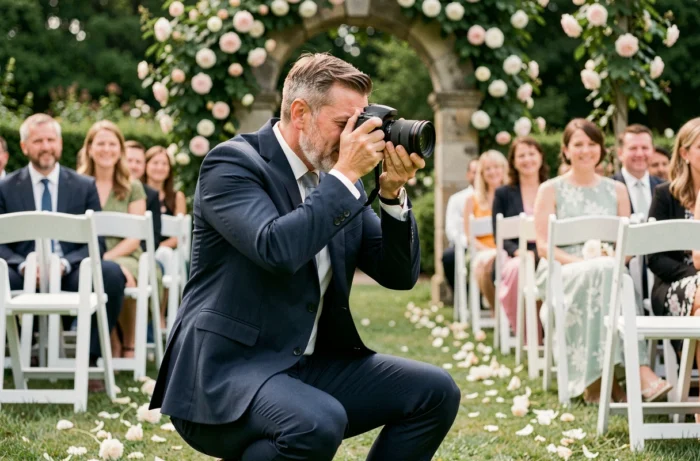
A wedding photographer does more than press the shutter. They anticipate a glance exchanged between the newlyweds, get into position before an emotion surfaces, and capture in a single image what memory might eventually fade. Choosing this professional means deciding how you’ll relive your day ten or twenty years from now.
Guests’ image rights: what your contract should cover
Have you noticed that most articles about wedding photography discuss style and emotion, but rarely the legal framework? Yet image rights come into play as soon as a recognizable person appears in a photo shared publicly.
Photographing a guest and publishing their photo are two separate things. Smiling at the camera does not constitute consent to have the photo shared on social media or included in the photographer’s portfolio. According to guidance from the CNIL and Service-Public.fr, permission to publish must specify the platforms involved and the intended use.
In practical terms, this means your contract should cover at least three situations: the private gallery sent to the newlyweds, the photographer’s commercial use of the images (portfolio, advertising), and sharing on social media. Agreeing on this in advance helps avoid takedown requests later, which can strain relationships with your loved ones.
Another subtle point: paying for the service does not transfer copyright. The photographer remains the author of their images. If you want to reuse them freely (create an album through another provider, send them to a magazine), the contract must include a transfer of usage rights. Professionals listed on the Photographes Mariage website for weddings generally specify these terms in their quotes.
Wedding photography styles: documentary, posed or fine art
A photographer’s style shapes the atmosphere of your memories. Before contacting anyone, think about what moves you when you look at wedding photos.
Documentary photography
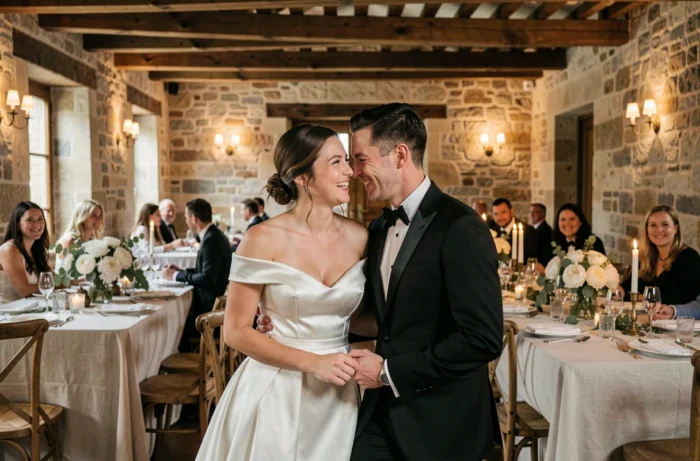
The photographer keeps a low profile, capturing spontaneous moments: a fit of laughter during the preparations, a tear during the vows, a child running under the tables. The images tell the story of the day like a documentary, without staging.
Posed and fine art photography
At the other end of the spectrum, posed photography carefully constructs each image. The couple is guided into position, the lighting is carefully crafted, and the setting is chosen with care. Fine art goes a step further, drawing on the conventions of art photography, with soft, often bright tones and meticulous attention to composition.
Most photographers combine documentary and posed photography. Key moments during the ceremony are captured as they happen, while the couple’s session after the celebration is more directed. Ask to see complete wedding galleries, not just the best shots selected for the portfolio.
Practical criteria for choosing a wedding photographer
You like the style and get along well, but is that enough? Before signing, consider several practical details.
- Consistency across portfolios from several weddings: a photographer may produce a stunning series at a sunlit château but deliver mediocre results in a dark reception hall. Review at least three complete wedding galleries shot in different conditions.
- The number of photos delivered and the turnaround time: some photographers promise several hundred edited images, while others deliver a few dozen carefully finished shots. Neither is automatically better, but you should know what you’ll receive and when.
- Hours of coverage: an eight-hour package does not cover the same as a full day. Check whether morning preparations and the evening reception are included or charged as extras.
- Cancellation terms and a backup plan: what happens if the photographer gets sick the day before? A reliable professional has a network of substitutes and mentions this in their terms and conditions.
Preparing your photographer for your wedding day
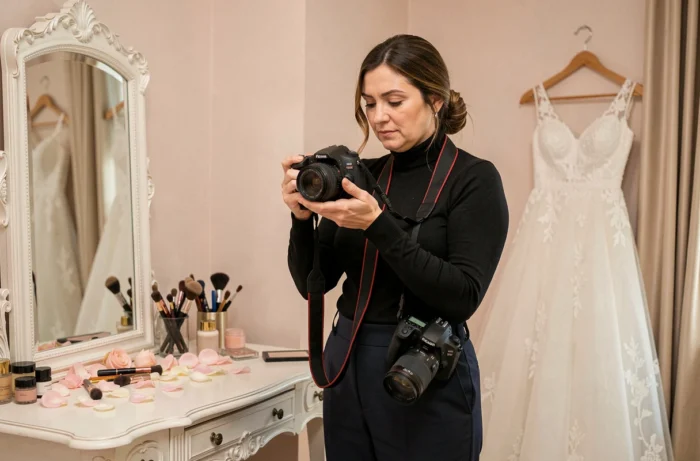
A good photographer plans ahead, but they can’t guess everything. Sharing a few details in advance can make a real difference to the final results.
Share a detailed schedule: preparation time, ceremony start, cocktail hour, dinner, and first dance. The more precise the timing, the better the photographer can plan shots around the natural light.
Identify the people and moments that matter most to you. A grandparent you absolutely want in the photos, a friend who will sing during the ceremony, or a decorative detail you spent months preparing. Without this list, the photographer can’t prioritize.
Also explain any venue restrictions. A church that prohibits flash, an estate with areas that are off-limits, or an outdoor ceremony with low, late-afternoon sun: every factor affects the photographer’s equipment and positioning.
Scouting the venue
Why does it matter? A site visit lets the photographer test angles, identify the best light sources, and spot distracting backgrounds. If your photographer offers to visit the venue, take them up on it. A thorough site visit shows in every photo on your wedding day.
Your wedding memories are more than a list of photos. They are images that capture a glance, a particular light, or a gesture you may not even have noticed at the time. The photographer you choose will shape the visual story of the day—the one you’ll share, frame, and treasure for years to come.